Behind the scenes of Synthesis with Ruby Shields

Journal
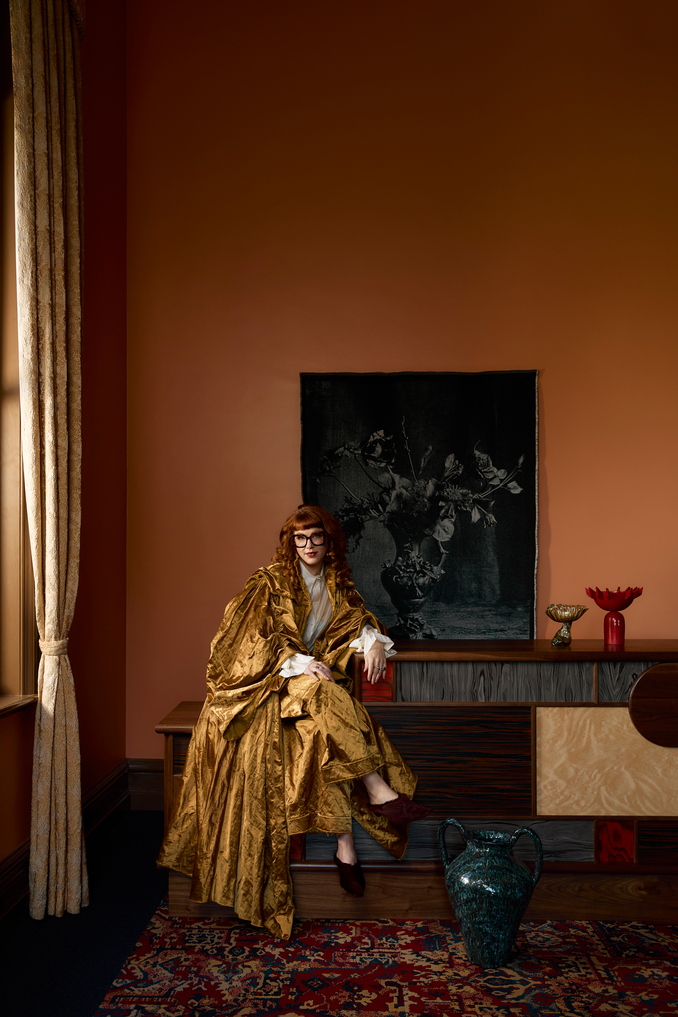
Ruby Shields wearing Couture colour Ochre made by Speczmen | Photography by Martina Gemmola
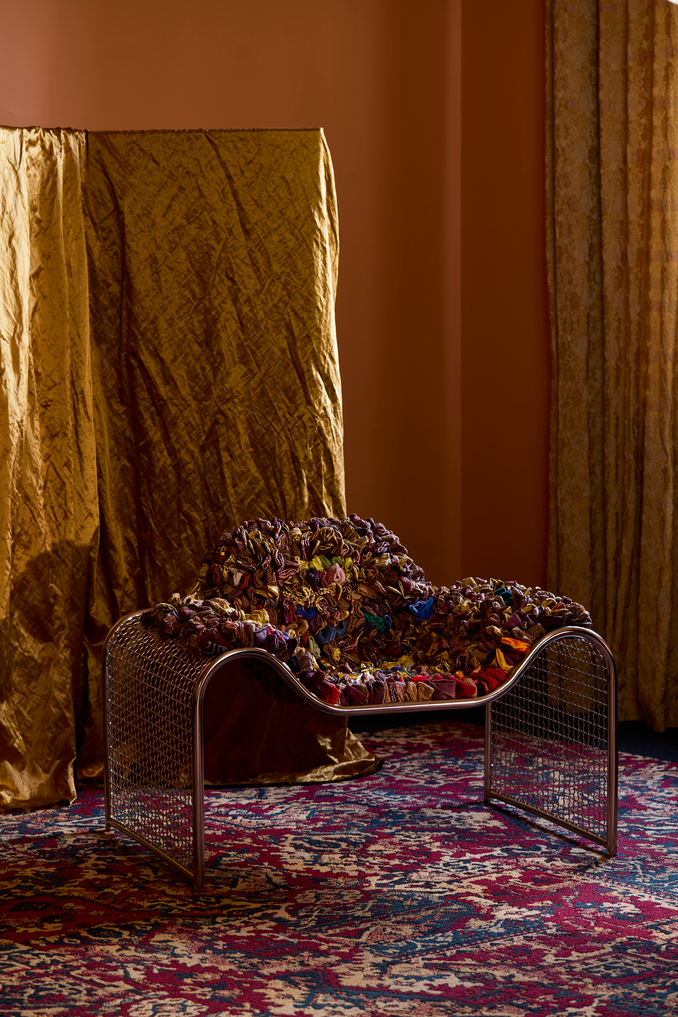
Drapery in Couture colour Ochre| Chair by Carl Broesen Studio | Photography by Martina Gemmola
Q&A | Studio Shields at Melbourne Design Week
You may recognise Ruby Shields, interior designer and founder of Shields Studio, from her maximalist, colour-laden, and immersive Instagram channel. This May, she brought her signature warm palette of deep brown, burgundy, and gold to Abbotsford Convent, curating Synthesis for Melbourne Design Week.
Inspired by her collaborative studio practice, the exhibition explored the web of disciplines, perspectives, materials, and makers required to create truly great interiors. Stepping through opulent Mokum drapes into Bishop’s Parlour, visitors were greeted by a layers of Australian design - from furniture and lighting to art, objects, and a bespoke Nunchi Oils fragrance.
We sat down with Ruby to discuss Synthesis, the power of colour and textiles, the Australian design perspective, and the way a space can make you feel.
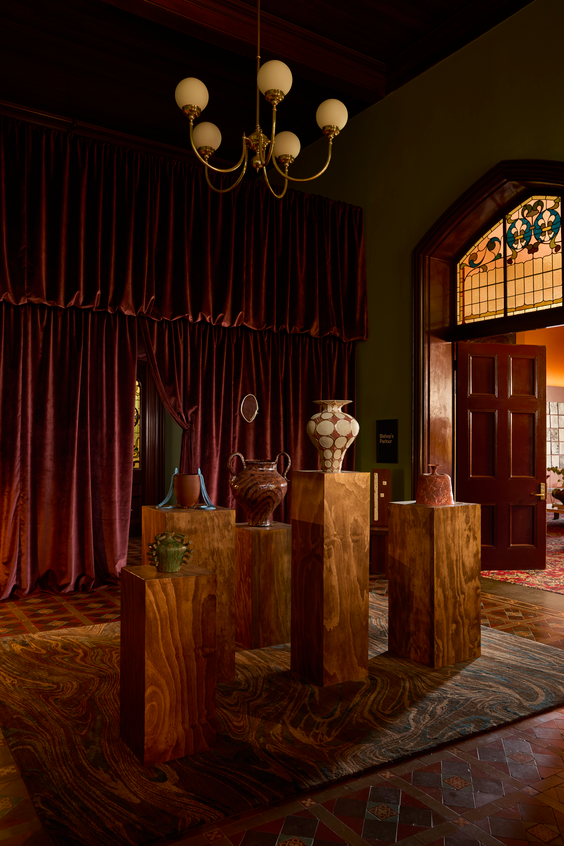
Curtains in Velvelux colour Ruby | Photography by Martina Gemmola
What inspired you to curate Synthesis for Melbourne Design Week?
What inspired you to curate Synthesis for Melbourne Design Week?
While architecture, furniture, and object design are often celebrated within the broader design industry, interior design sometimes sits in the background - despite ultimately shapeing the way we experience a space. With Synthesis, I wanted to create something that championed the value of interiors and demonstrated their ability to foster connection.
The concept itself emerged when reflecting on how I work as a studio. Every project involves a network of furniture designers, textile houses, artists, makers, lighting designers, craftspeople, and clients; the final space is a synthesis of all those contributions. Melbourne Design Week was an opportunity to showcase that collaboration and highlight the incredible talent that exists within Australia's creative community.
Also, as a young studio, it was important to contribute to Melbourne's design culture and participate in a festival that continually pushes the design conversation forward.
How did the location contribute to the exhibition?
How did the location contribute to the exhibition?
Rather than create a showroom or exhibition display, the installation was conceived as one of the most universal and recognisable interior typologies: a living room.
The Bishop's Parlour at Abbotsford Convent provided an extraordinary backdrop because it already embodied many of the ideas we were exploring. I wanted visitors to feel as though they were stepping into a home and to leave with a greater appreciation for the power of interiors and the role they play in everyday life.
While the concept of Synthesis was established before the venue was secured, the Bishop's Parlour introduced an unexpected layer that ultimately strengthened the exhibition. The generous proportions, original detailing, and sense of permanence created a framework that allowed contemporary pieces to feel grounded and purposeful.
I imagined the room as a grand 18th-century sitting room, reinterpreted through the lens of contemporary Australian design. Rich textiles, sculptural furniture, art, and objects sat comfortably within the heritage shell, encouraging dialogue between past and present. That juxtaposition became one of my favourite aspects of the exhibition, demonstrating that great interiors don’t impose on their surroundings, they adapt to them.
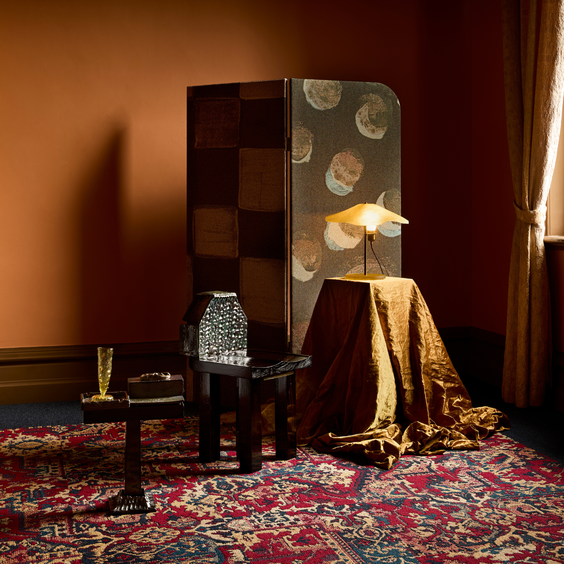
Display in Couture colour Ochre | Photography by Martina Gemmola
Colour confidence is synonymous with Studio Shields. How does colour influence your design practice and Synthesis in turn?
Colour confidence is synonymous with Studio Shields. How does colour influence your design practice and Synthesis in turn?
Colour has always been one of my most powerful design tools. It has the ability to influence mood, alter perception, and create emotional resonance in a way few other materials can. I'm less interested in colour as decoration and more interested in colour as architecture.
Colour can define a space, create hierarchy, establish atmosphere, and completely change the way a room is experienced. But beyond that, colour represents something much bigger to me: self-expression.
Using colour architecturally is my rebellion against the idea that our homes should appeal to everyone else before they appeal to us. A home should tell your story; reflecting your personality, your memories, and the way you want to feel, not simply what is considered timeless or commercially safe.
Being, in many ways, an immersive business card for Studio Shields, it was important that Synthesis embodied those values completely. From the burgundy drapes cocooning the architecture to the rich layers of textiles, timbers, and patterned carpet, every element was intended to demonstrate that expressive interiors can be sophisticated, welcoming, and liveable.
I wanted visitors to leave feeling inspired rather than intimidated. To realise that embracing colour, texture, and individuality doesn't create chaos; it creates spaces with soul.
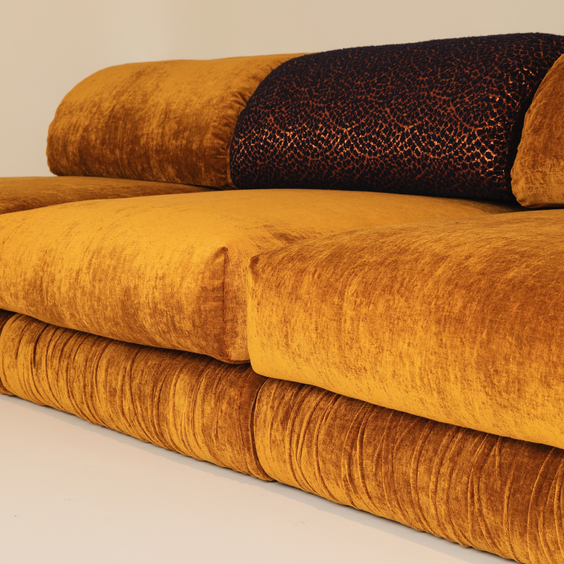
Sofa in Bespoke colour Topaz and Lulu by Romo | Sofa by Culture Cush
What role do textiles play in Synthesis and how do they interact with other design elements?
What role do textiles play in Synthesis and how do they interact with other design elements?
For me, textiles are never applied at the end of a project. They shape atmosphere, respond to light, soften architecture, influence acoustics, and establish emotional tone and intimacy. In Synthesis they weren't simply finishes, they were fundamental to the experience.
Our hero piece, a custom Clinque sofa by Culture Cush upholstered in Catherine Martin's Bespoke Topaz, immediately felt at home within the Bishop's Parlour. Its warmth complemented the existing butter-yellow drapes and soft salmon tone of the heritage walls, while the velvet itself referenced the richness and romance of Victorian interiors. I wasn't interested in recreating history, instead borrowing its sense of warmth, generosity, and drama.
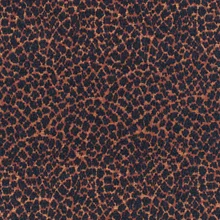
While the topaz tones accented the shifting colours within the expressive carpet, the alternating end panels in Lulu by Romo introduced subtle flashes of blue and delicate woven gold that caught the light throughout the day. Those small moments of shimmer echoed the velvet rather than competing with it, allowing the sofa to feel layered from every angle.
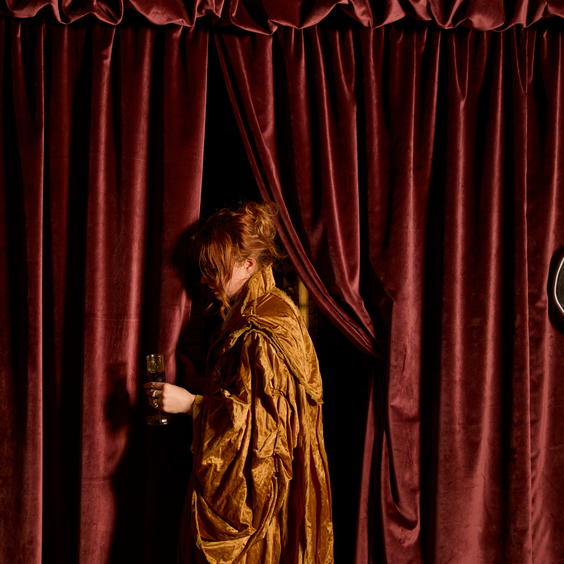
Ruby Shields in Courture colour Ochre, Curtains in Velvelux colour Ruby | Photography by Martina Gemmola
Velvelux by Mokum in deep Ruby performed a very different role. Working with the existing green foyer, I wanted the drapery to feel as though it had always hung in the building, comfortable alongside the timber architraves and introducing one of my favourite colours into the composition.
More than simply dividing the rooms, the drapery became architecture and established a sense of anticipation. I needed a fabric with weight, depth, and a gentle lustre - something dramatic enough to command the space whilst remaining soft and inviting. Velvelux delivered exactly that. Its substantial handle allowed it to hang beautifully and its fire-rated performance meant it was a go!
Although Couture by Mokum became the hero garment fabric that framed the exhibition, it was really the conversation between multiple textiles that brought Synthesis to life. Each was selected in response to another element within the room, creating a layered palette which introduced tactility and encouraged visitors to experience the space emotionally rather than simply visually.



Why is celebrating and specifying Australian designers so important to Studio Shields?
Why is celebrating and specifying Australian designers so important to Studio Shields?
Australia has a unique design voice. There is a willingness to experiment, a strong connection to materiality, and an ability to balance sophistication with informality. Many Australian designers work closely with local manufacturers and craftspeople, creating pieces that feel deeply considered, highly personal, and reflective of our culture, landscape, and way of life.
For Synthesis, celebrating Australian design was a natural extension of the exhibition's theme; demonstrating what can happen when talented local creatives come together around a shared vision.
The future of Australian design depends on these collaborations being visible, valued, and supported. By specifying these designers, we contribute to an ecosystem that allows creativity, innovation, and craftsmanship to continue flourishing.
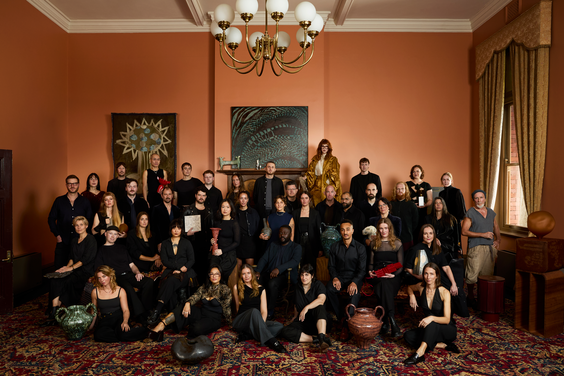
The group of exhibiting artists - curated by Studio Shields | Photography by Martina Gemmola
Hazel Redmond is an architectural photographer based in New Zealand’s Hawke's Bay. With an unmatched eye for detail, light, and composition she has photographed numerous award-winning residential and commercial spaces across the country. We sat down with Hazel to discuss the magic of light, lines...