Inherent in the fibre, expressed in the weave, or created during finishing

Journal
Creating lustrous textiles
Whether an interior evokes an organic lustre, high-shine glamour, or polished gloss, textiles with a sense of luminosity bring layers of interest into our interior spaces.
Lustre can be achieved in three key ways: it can be inherent in the fibre, emphasised through the weave, or created via a specialised finishing process.
In this article we will explore some of our favourite fibres, weaves, and finishes for a glowing interior.
Lustrous fibres
Lustrous fibres
Textile fibres are natural or synthetic structures that can be spun into yarn and woven, knitted, or bonded into fabric. As we often discuss, each fibre offers a series of unique advantages to a textile; one being an inherent lustre.
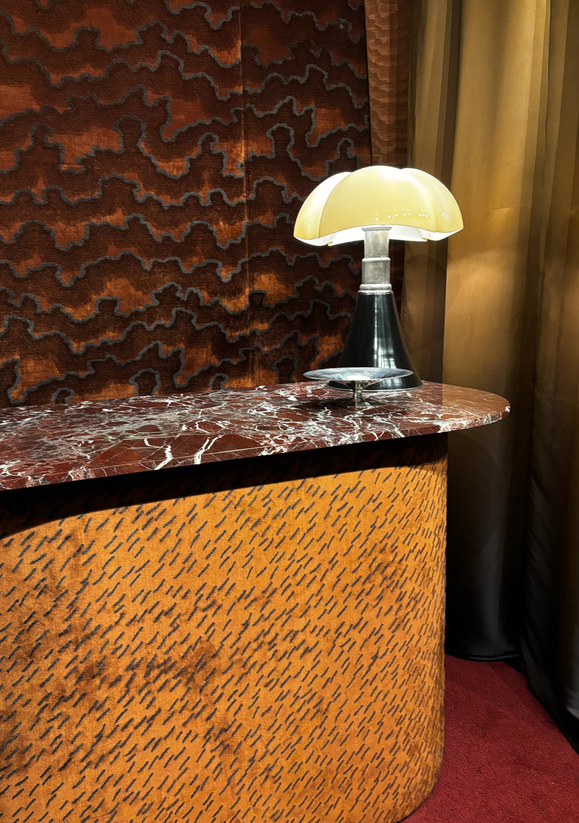
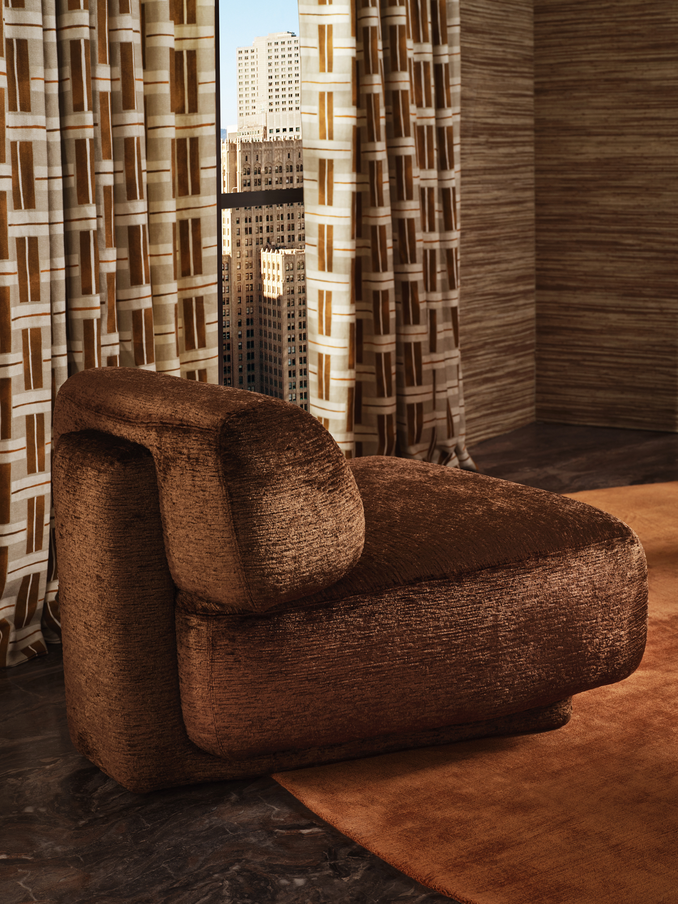
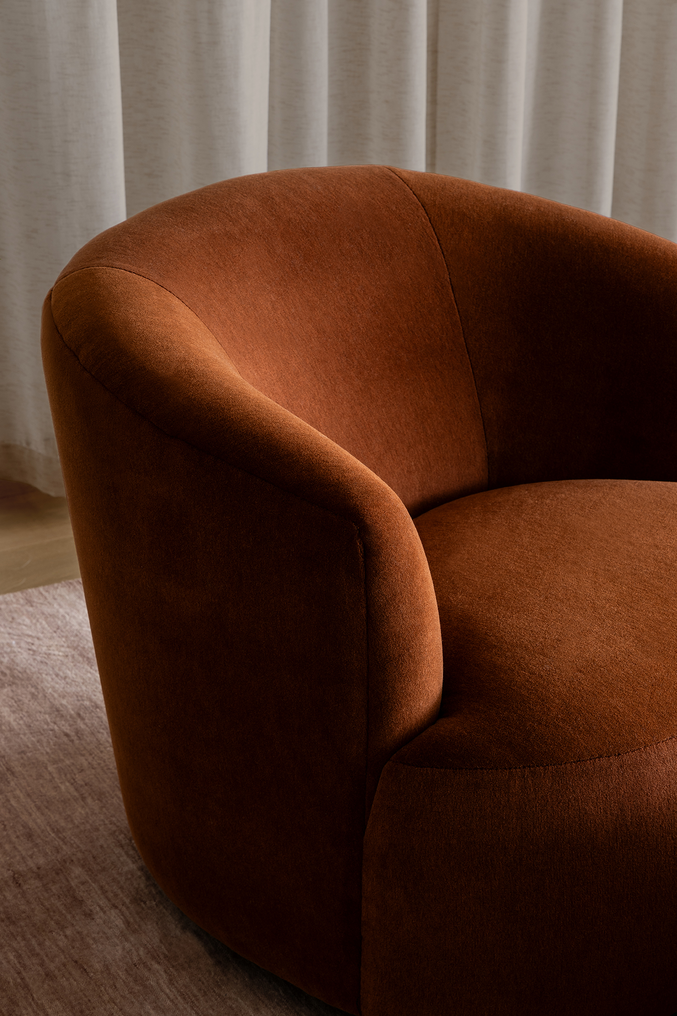
A Mokum favourite, viscose is an extremely lustrous regenerated fibre which is at its most luxurious when woven into velvet as the deep pile reflects light and beautifully emulates silk. Noble fibres including llama, alpaca, and mohair also present a more understated luminosity when woven into velvet textiles.
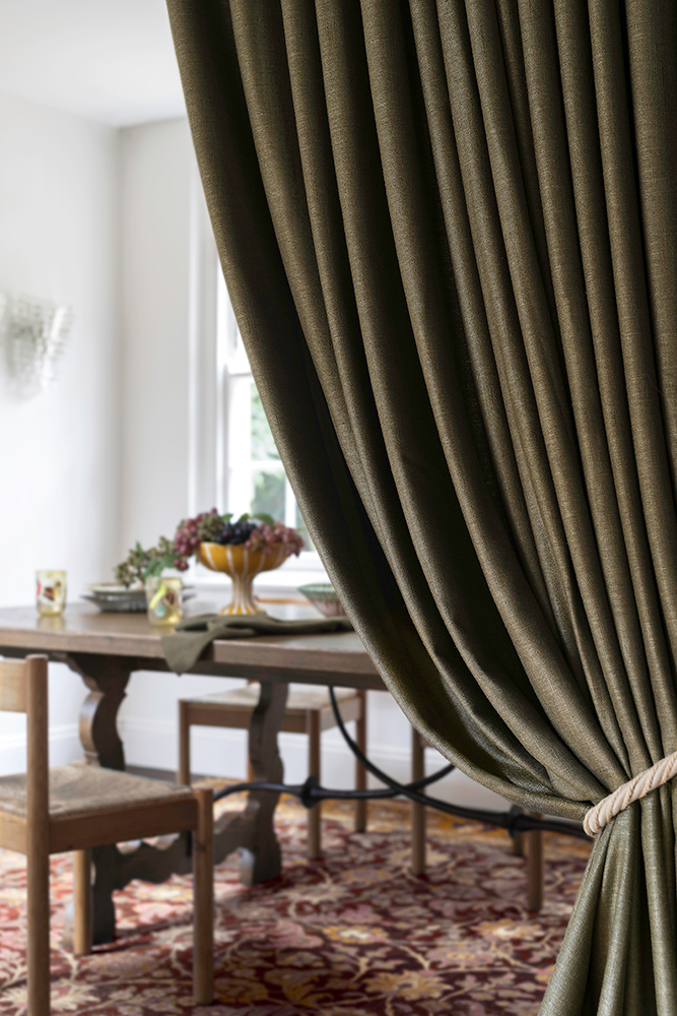
Many bast fibres offer this inherent (although more organic than high-shine) lustre due to their cellulose (plant fibre) composition. Linen, ramie, and sisal are three particularly lustrous bast fibres which are popular across fashion and interior fabrics, wallcoverings, and even carpets.


Lustrous weaves
Lustrous weaves
Sateen or satin weave textiles feature a high number of ‘floats’ (warp yarns atop of the weft) on the fabric surface, resulting in a fabric with a glossy face and a dull reverse. These floats emphasise the natural lustre of a fibre, creating a luxurious ‘liquid drape’ when hung.
A ‘satin’ is woven from filament yarns like silk, nylon, or polyester, whilst a ‘sateen’ is woven from short staple yarns like cotton.
The satin weave emphasises the natural luminosity and irregular slubs of pure linen fibre in Catherine Martin by Mokum’s elegant Satnin drapery, whilst Sleek, James Dunlop’s recycled polyester satin weave, presents a highly polished surface and fluid drape for a refined, contemporary look.
Due to the floats sateen/satin weave textiles are somewhat delicate and therefore generally reserved for drapery applications.


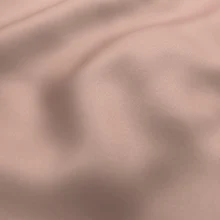

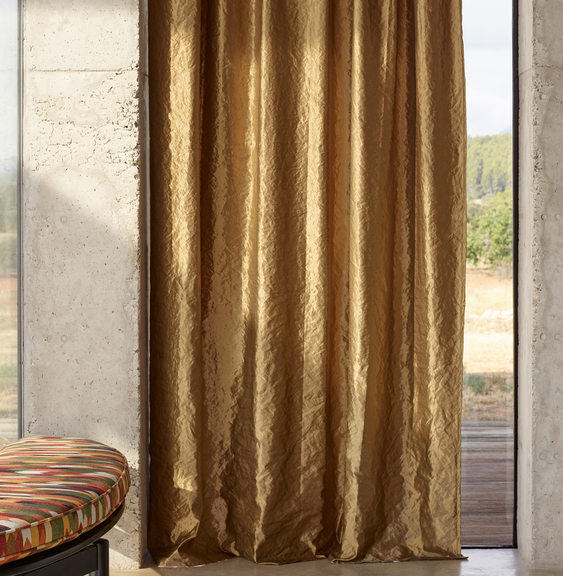
Deriving from the Persian word taftah meaning ‘crisp, woven,’ taffeta is a tightly woven plain weave textile with a smooth yet crisp surface and slight weft direction rib. The yarns are twisted as they are woven to create taffeta’s signature stiffness.
Originating in Iraq in the 12th century, taffeta was first woven from continuous filament silk yarns but is now constructed from a range of fibres, most popularly polyester for its durability and sheen.
Couture by Mokum is a high-glamour taffeta woven from a blend of cotton, polyester, and stainless steel for a dimensional hammered finish. The stainless steel yarn accentuates the crisp nature of taffeta to create an even more voluminous drapery.



Lustrous finishes
Lustrous finishes
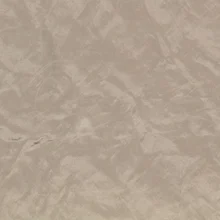
Calendaring is a textile finishing process where a series of rollers apply heat and pressure to the woven surface. By flattening the surface and compressing the weave, calendaring increases durability whilst imparting a ‘glazed’ or ‘polished’ appearance.
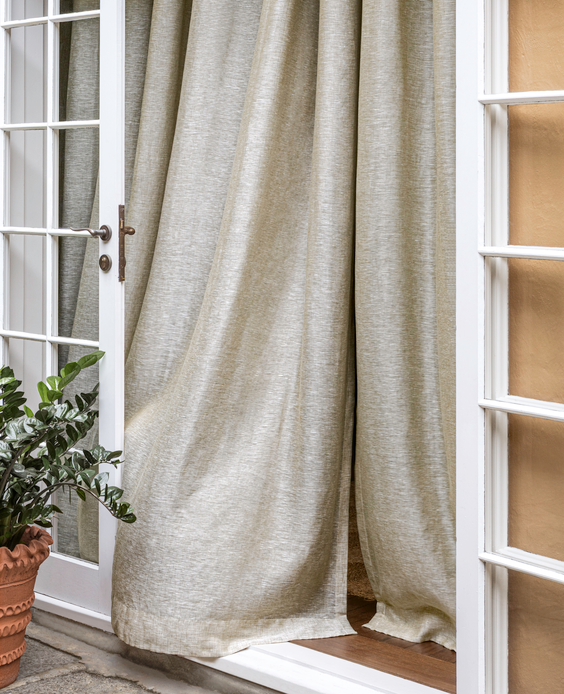
The amount of heat and pressure applied dictates the final look. From James Dunlop’s Les Archives collection, Lumière is a lightweight linen which has been lightly calendared for gentle luminosity, whilst Atelier is a linen-look polyester which has been heavily calendared to create a polished, highly glazed surface showcasing the slubs and irregularities of the weave.
The rollers can be uniform, creating the consistent glazed surface we see in Lumière and Atelier, or they can be embossed to create a pattern across the surface.
Chintz, the most well-known calendared textile, is a traditional Indian glazed cotton calico featuring floral designs which found popularity across Europe in the 1600s and reached its modern peak in the 1980s thanks to interior designers like the ‘Prince of Chintz’ Mario Buatta. From Marie Antoinette to Jackie Kennedy and many modern country homes, chintz is an enduring classic in textile design.
It is important to note that no calendered finish is permanent; the glazed effect will be progressively reduced after dry cleaning or be completely removed after washing.


An immersive preview of fabric and wallcovering trends displayed in showrooms, windows, and installations across Paris, Déco Off is a highlight of the design industry calendar and the perfect way to start the year. In this article, PR professionals Jo Gibbs and Effie Kaptain of K+J Agency share t...